SlimeVR Trackers: DIY Full Body Tracking for VR Gaming
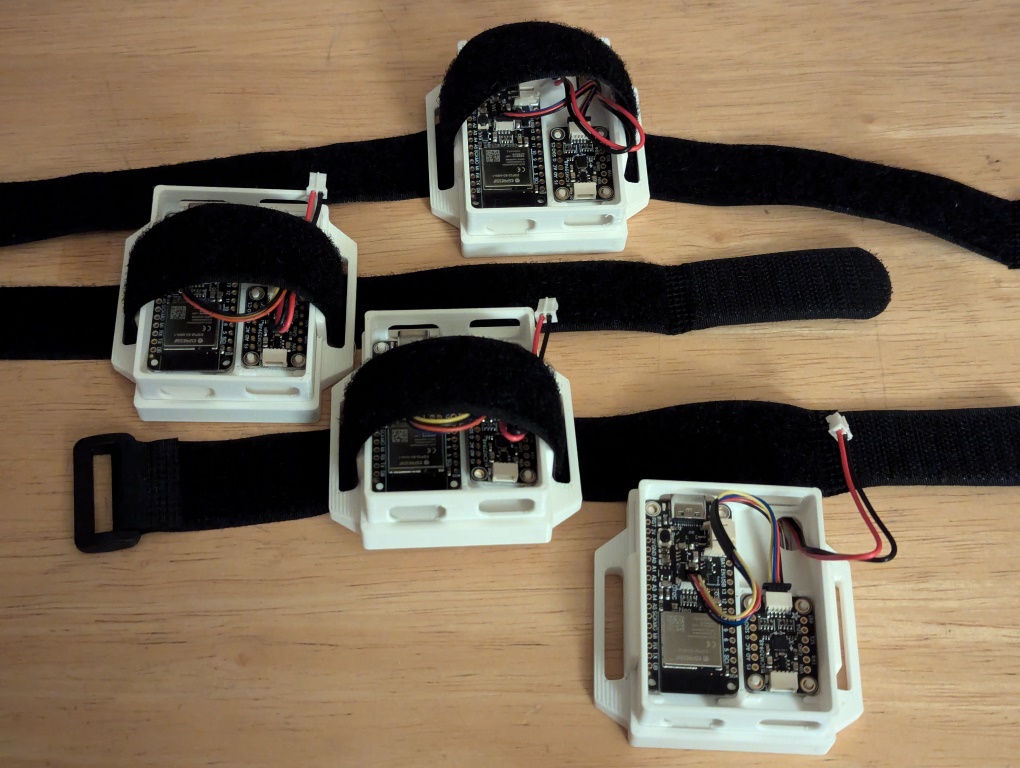
Ever felt limited by just your head and hands in VR? Crave the freedom to kick, duck, and dance your way through your favorite virtual worlds? Imagine having full body tracking without breaking the bank. Well, stop imagining, because that reality is closer than you think!
For years, achieving true full body tracking in VR has often meant shelling out a significant amount of money. The high cost of commercial solutions can be a major barrier for entry, leaving many VR enthusiasts feeling like they're only getting a fraction of the immersive experience.
That's where Slime VR comes in. Slime VR offers a fantastic solution: DIY full body tracking that's both affordable and customizable. It's designed for VR gamers and enthusiasts who want to elevate their immersion without emptying their wallets, providing a path to explore and enhance their virtual reality experiences in a fun and engaging way.
In this article, we'll explore the world of Slime VR, from the basics of what it is and how it works, to the exciting potential it unlocks for VR gaming and beyond. We'll delve into personal experiences, historical context, hidden secrets, and practical tips for getting started. Get ready to dive into the exciting world of DIY full body tracking with Slime VR!
My First Dance in VR with Slime VR
I remember the first time I truly felt present in VR. It wasn't just the visuals or the hand tracking; it was the feeling of mywholebody being represented. Before Slime VR, my movements felt restricted, almost like I was a floating torso. But then I built my Slime VR trackers, strapped them on, and stepped into VRChat. The difference was night and day.
Suddenly, I could dance! I could actuallyseemy legs moving (albeit in a somewhat rudimentary fashion), and that connection to my virtual avatar was incredibly powerful. I was no longer just controlling a character; Iwasthe character. The immersion skyrocketed, and simple actions like sitting down or reaching for something became so much more natural. There were hiccups, of course. Calibration took some getting used to, and sometimes the trackers would drift a bit. But the sheer joy of having affordable full body tracking far outweighed the minor inconveniences. It opened up a whole new dimension of social interaction in VR, letting me express myself in ways I never thought possible. Slime VR became more than just a gadget; it became a gateway to a more authentic and engaging virtual experience.
What Exactly Is Slime VR?
Slime VR is an open-source project that allows you to create your own full body tracking system for VR using inexpensive components. Instead of relying on expensive, proprietary hardware, Slime VR utilizes inertial measurement units (IMUs) – small, affordable sensors that detect movement and orientation. These IMUs are then attached to different parts of your body (typically the feet, knees, hips, and chest) and communicate wirelessly with your computer. The software then translates the data from these sensors into full body tracking information, which can be used in various VR applications and games.
Think of it like this: each tracker acts as a little "motion capture point" on your body. The more trackers you use, the more accurately your movements will be reflected in VR. The open-source nature of the project means that the software is constantly being improved and refined by a dedicated community of developers and enthusiasts. This also allows for a high degree of customization; you can modify the hardware and software to suit your specific needs and preferences. Slime VR isn't just a product; it's a platform for experimentation and innovation in the realm of VR tracking.
A Brief History and Some Fun Myths
The origins of Slime VR can be traced back to a desire for accessible full body tracking within the VR community. Frustrated by the high cost of existing solutions, a group of developers and enthusiasts began experimenting with alternative approaches, ultimately leading to the creation of the Slime VR project. The project gained momentum through online forums and communities, where individuals shared their knowledge, resources, and code.
One common "myth" surrounding Slime VR is that it's incredibly difficult to set up and use. While there is certainly a learning curve involved, the project has become increasingly user-friendly over time, with detailed documentation and helpful community support available. Another misconception is that Slime VR is only suitable for advanced users or developers. While technical skills can be helpful, the project is designed to be accessible to anyone with a basic understanding of electronics and programming. The truth is that Slime VR is a testament to the power of open-source collaboration, demonstrating how a community of passionate individuals can come together to create innovative and affordable solutions to complex problems.
Unveiling the Hidden Secrets
One of the often-overlooked aspects of Slime VR is its potential beyond just gaming. While it excels at providing full body tracking for VRChat and other VR games, its capabilities extend to other applications as well. For example, Slime VR can be used for motion capture in animation, allowing artists to create realistic and expressive character movements without the need for expensive studio equipment. It can also be used in rehabilitation and physical therapy, providing valuable data on patient movement and progress.
Another "secret" of Slime VR is its customizability. You're not limited to using the standard components or configurations. You can experiment with different types of IMUs, modify the software to suit your specific needs, and even design your own tracker enclosures. The open-source nature of the project encourages creativity and innovation, allowing you to tailor the system to your unique requirements. The hidden secret of Slime VR lies in its versatility and its potential to be used in a wide range of applications beyond just gaming, limited only by your imagination.
Recommendation for Slime VR Newbies
If you're considering diving into the world of Slime VR, I highly recommend starting with a pre-assembled kit or a well-documented build guide. While building your own trackers from scratch can be a rewarding experience, it can also be quite challenging, especially if you're new to electronics and programming. A pre-assembled kit will provide you with all the necessary components and instructions, allowing you to get up and running quickly and easily.
Also, don't be afraid to ask for help! The Slime VR community is incredibly supportive and welcoming, and there are plenty of resources available online to guide you through the process. Whether you're struggling with a particular step in the build process or having trouble calibrating your trackers, there's always someone willing to lend a hand. Remember, the goal is to have fun and learn something new. Don't get discouraged if you encounter roadblocks along the way. With a little patience and perseverance, you'll be dancing in VR in no time!
Dive Deeper into IMUs and Sensor Fusion
The heart of the Slime VR system lies in the IMUs, or Inertial Measurement Units. These little devices pack a powerful punch, combining accelerometers and gyroscopes (and sometimes magnetometers) to detect movement and orientation. Accelerometers measure linear acceleration, telling us how quickly the device is speeding up or slowing down. Gyroscopes measure angular velocity, telling us how quickly the device is rotating.
The real magic happens when these two data streams are combined using a process called sensor fusion. Algorithms like Kalman filters or complementary filters are used to integrate the accelerometer and gyroscope data, creating a more accurate and stable estimate of the device's orientation. This is crucial for Slime VR, as even small errors in orientation can lead to significant tracking inaccuracies. Sensor fusion helps to smooth out noisy data, compensate for drift, and provide a reliable representation of the tracker's movement. Understanding the principles behind IMUs and sensor fusion is essential for troubleshooting tracking issues and optimizing the performance of your Slime VR system.
Top 5 Tips for Optimal Slime VR Tracking
Getting the best possible tracking performance with Slime VR requires a bit of fine-tuning and attention to detail. Here are my top 5 tips to help you get the most out of your DIY full body tracking system:
1.Accurate Calibration is Key: Spend the time to calibrate your trackers properly. Follow the instructions carefully and ensure that your body is in a neutral pose during the calibration process. A poorly calibrated system will result in inaccurate tracking and a frustrating experience.
2.Secure Mounting is Essential: Make sure your trackers are securely attached to your body. Loose trackers will wobble and introduce noise into the tracking data. Use straps or other mounting solutions that provide a snug and comfortable fit.
3.Minimize Magnetic Interference: Avoid placing your trackers near strong magnetic fields, such as speakers or power supplies. Magnetic interference can disrupt the magnetometer readings and negatively impact tracking accuracy.
4.Keep Your Environment Well-Lit: While Slime VR doesn't rely on external cameras, good lighting can still improve tracking performance. Proper lighting helps to reduce noise and improve the accuracy of the IMU data.
5.Experiment with Tracker Placement: Don't be afraid to experiment with different tracker placements to find what works best for you. Some users find that placing trackers on their ankles provides better tracking than placing them on their feet. Find the configuration that gives you the most accurate and comfortable tracking experience.
Troubleshooting Common Slime VR Issues
Even with careful setup and calibration, you may still encounter occasional issues with your Slime VR tracking. Here are some common problems and their solutions:
Drift: Drift occurs when the trackers gradually lose their orientation over time. This can be caused by sensor inaccuracies or magnetic interference. To combat drift, try recalibrating your trackers periodically. You can also try moving away from any potential sources of magnetic interference.
Jitter: Jitter refers to small, rapid movements in the tracking data. This can be caused by noisy sensor data or loose tracker mounts. To reduce jitter, try tightening your tracker mounts and smoothing the tracking data using software filters.
Inaccurate Leg Tracking: Inaccurate leg tracking is a common issue with Slime VR. This can be caused by incorrect tracker placement or calibration errors. To improve leg tracking, make sure your trackers are properly calibrated and that you're using a tracker configuration that works well for your body type. Experiment with different tracker placements to find what works best for you.
Connection Problems:If you're having trouble connecting your trackers to your computer, make sure your Wi-Fi network is stable and that your trackers are within range of your Wi-Fi router. You can also try restarting your computer and your trackers to see if that resolves the issue.
Fun Facts About Slime VR
Did you know that the name "Slime VR" is a playful nod to the often messy and unpredictable nature of DIY projects? The "slime" represents the experimental and sometimes chaotic process of building and tinkering with the system. But don't let the name fool you; despite its humble origins, Slime VR has evolved into a sophisticated and surprisingly accurate full body tracking solution.
Another fun fact is that the Slime VR community is incredibly diverse, with members from all over the world contributing their skills and knowledge to the project. From software developers and hardware engineers to artists and VR enthusiasts, the community is a melting pot of talent and creativity. This collaborative spirit is what drives the innovation and continuous improvement of the Slime VR project. And here's a little-known tidbit: some Slime VR users have even used their systems for things like virtual dance performances and motion capture for indie game development!
How to Build Your Own Slime VR Trackers
Building your own Slime VR trackers can seem daunting at first, but it's a surprisingly rewarding and educational experience. The basic process involves gathering the necessary components, assembling the trackers, flashing the firmware, and calibrating the system. Here's a simplified overview of the steps involved:
1.Gather Your Components: You'll need IMUs (typically BNO055 or similar), microcontrollers (like ESP32 boards), batteries, charging modules, resistors, capacitors, and wiring. You'll also need materials for the tracker enclosures, such as 3D-printed parts or plastic housings.
2.Assemble the Trackers: Connect the IMUs, microcontrollers, and other components according to the wiring diagrams provided in the Slime VR documentation. Solder the connections carefully and ensure that everything is properly insulated.
3.Flash the Firmware: Download the Slime VR firmware from the Git Hub repository and flash it onto the microcontrollers using a programming tool like Arduino IDE. Follow the instructions in the documentation carefully to ensure that the firmware is flashed correctly.
4.Calibrate the System: Once the firmware is flashed, you can connect the trackers to your computer and calibrate the system using the Slime VR server software. Follow the calibration instructions carefully to ensure that your trackers are properly aligned and oriented.
What If Slime VR Fails? Troubleshooting Tips
Even with the best intentions and careful assembly, sometimes things can go wrong with your Slime VR setup. Don't panic! Most issues can be resolved with a bit of troubleshooting. Here are some common scenarios and their solutions:
Trackers not connecting: Double-check your Wi-Fi connection, ensure the trackers are powered on, and verify the IP addresses are correctly configured in the Slime VR server. Try restarting the server and the trackers.
Drifting tracking: Recalibrate your trackers regularly. Experiment with different tracker placements to minimize drift. Ensure there are no strong magnetic fields nearby interfering with the IMUs.
Inaccurate movements: Ensure your body proportions are correctly set in the Slime VR server. Double-check your tracker mounting points are secure and not shifting during movement.
Connection drops: Improve your Wi-Fi signal strength. Reduce the number of devices connected to your Wi-Fi network. Consider using a dedicated Wi-Fi router for your Slime VR system.
5 Reasons to Try Slime VR for VR Gaming
Slime VR offers a compelling alternative to expensive commercial full-body tracking solutions. Here's a listicle highlighting the key reasons why you should consider giving it a try:
1.Affordability: Significantly cheaper than commercial options, making full-body tracking accessible to a wider audience.
2.Customization: Highly customizable, allowing you to tailor the system to your specific needs and preferences.
3.Open-Source: Backed by a vibrant and supportive community, ensuring continuous development and improvement.
4.Immersion: Enhances VR immersion by providing a more natural and realistic representation of your body in virtual environments.
5.Fun and Educational: A rewarding DIY project that teaches you about electronics, programming, and VR technology.
Question and Answer
Here are some frequently asked questions about Slime VR:
Q: Is Slime VR difficult to set up?
A: There is a learning curve, but with readily available guides and a helpful community, the setup process is manageable, especially with pre-assembled kits.
Q:What VR platforms are compatible with Slime VR?
A: Slime VR primarily targets PCVR platforms like Steam VR and VRChat, with ongoing efforts to expand compatibility.
Q:How accurate is Slime VR tracking?
A: While not as precise as high-end commercial systems, Slime VR offers surprisingly accurate tracking, especially with proper calibration and setup.
Q:What are the benefits of open-source VR tracking?
A: Open-source VR tracking promotes innovation, customization, community collaboration, and affordability, empowering users to shape their VR experiences.
Conclusion of Slime VR Trackers: DIY Full Body Tracking for VR Gaming
Slime VR offers a compelling and affordable path to experiencing full body tracking in VR. While it requires some DIY effort and technical knowledge, the rewards are well worth the investment. From enhanced immersion in VR games to new creative possibilities in animation and motion capture, Slime VR unlocks a world of possibilities for VR enthusiasts and beyond. So, dive in, experiment, and join the community – the future of full body tracking is in your hands!
Post a Comment