VR NPC Behavior: AI Characters in VR Gaming
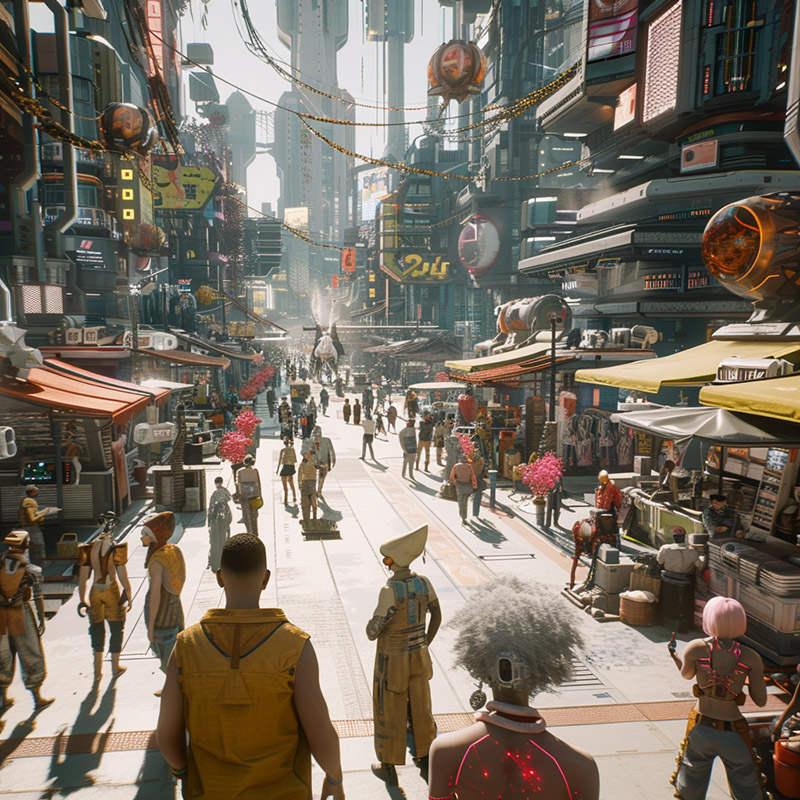
Imagine stepping into a virtual world where every character feels alive, reacting to your actions with genuine emotion and intelligence. No longer are you alone in a digital landscape, but surrounded by beings that seem to think, feel, and adapt. This is the promise of advanced AI in VR gaming, and it's closer than you might think.
But let's be real, current VR NPCs often fall short. They can feel robotic, their actions predictable, and their responses canned. The illusion of presence shatters when an NPC repeats the same line for the tenth time, or walks directly through a table. We crave interactions that are believable and engaging, experiences that make us forget we're wearing a headset.
This exploration dives into the fascinating world of VR NPC behavior, focusing on how AI is revolutionizing character interactions in virtual reality. We'll look at the challenges, the advancements, and the exciting possibilities that lie ahead for creating truly believable and engaging virtual companions.
The evolution of AI in VR is creating increasingly realistic NPC behaviors. From improved responsiveness to dynamic dialogue and believable emotions, these advancements are changing the way we experience virtual worlds. We'll discuss key aspects like AI-driven animation, natural language processing, and believable emotional responses. Get ready to explore the future of VR gaming, where the line between the virtual and real becomes increasingly blurred thanks to sophisticated AI NPCs.
The Importance of Believable VR NPC Interactions
For me, the immersion in a VR game hinges on the believability of its characters. I remember playing a fantasy RPG where the story was captivating, the world stunning, but the NPCs felt like cardboard cutouts. Their dialogue was stilted, their reactions unnatural, and it completely took me out of the experience. It was like watching a play where the actors were clearly just reading lines. This experience underscored the critical role that AI-driven NPCs play in making VR truly immersive.
Believable VR NPC interactions are not just about avoiding robotic dialogue or repetitive actions. They encompass a holistic approach to character design, encompassing everything from animation and facial expressions to emotional responses and adaptive behavior. When NPCs react appropriately to your actions, show genuine emotion, and adapt to changing circumstances, they become more than just programmed entities; they become believable inhabitants of the virtual world. This believability, in turn, is crucial for creating a sense of presence and engagement, allowing players to fully immerse themselves in the game and form meaningful connections with the virtual environment and its inhabitants. The key is to make them feel real, to make their actions feel motivated, and to make their presence contribute to the overall narrative in a meaningful way. This relies heavily on advanced AI capable of understanding context, responding dynamically, and creating nuanced character behaviors.
What Makes an AI NPC "Smart"?
A "smart" AI NPC in VR goes far beyond simple pre-programmed responses. It's about creating a system that can understand the player's actions, the context of the environment, and the overall goals of the game, and then react in a way that is both believable and engaging. This involves a complex interplay of different AI technologies.
One crucial component is natural language processing (NLP), which allows NPCs to understand and respond to player speech in a natural and intuitive way. Instead of relying on rigid dialogue trees, NLP enables NPCs to engage in dynamic conversations, answer questions, and even express emotions through their tone of voice. Another key aspect is AI-driven animation, which allows NPCs to move and behave in a realistic and nuanced way. This includes everything from subtle facial expressions to complex body language, all of which contribute to the overall believability of the character. Furthermore, a truly smart AI NPC should be able to learn and adapt over time. By analyzing player interactions and observing the environment, the AI can refine its behavior and become more responsive to the player's needs and preferences. This creates a dynamic and ever-evolving experience, where NPCs feel like they are truly alive and engaged in the virtual world. Ultimately, a smart AI NPC is one that can seamlessly integrate into the game world, enhance the player's experience, and create a sense of presence and immersion.
The History and Mythology of AI NPCs
The idea of creating artificial beings with intelligence and personality has captivated human imagination for centuries. From the mythical Golem to the robots of science fiction, the concept of the AI NPC has a rich history and mythology. Early examples in video games were rudimentary, often consisting of simple scripts and pre-determined behaviors. However, as AI technology has advanced, so too has the sophistication of virtual characters.
The evolution of AI NPCs can be traced through the history of gaming. Early text-based adventures featured simple interactions, while later graphical games introduced basic pathfinding and scripted events. The development of more advanced AI algorithms, such as finite state machines and behavior trees, allowed for more complex and dynamic behaviors. Games like Half-Lifeand F.E.A.R.were pioneers in creating believable AI enemies that could coordinate attacks, flank the player, and react to changing circumstances. Today, we are seeing the emergence of AI NPCs that utilize machine learning and neural networks to create even more realistic and immersive experiences. These NPCs can learn from player interactions, adapt to different situations, and even exhibit emergent behaviors that were not explicitly programmed by the developers. The future of AI NPCs promises to be even more exciting, with the potential for creating truly believable and engaging virtual companions that can enhance our experiences in VR and beyond. The line between reality and virtuality continues to blur, fueled by the ongoing quest to create increasingly intelligent and lifelike AI characters.
The Hidden Secrets of Truly Immersive VR NPCs
The secret to creating truly immersive VR NPCs lies not just in advanced AI algorithms, but also in subtle design choices that tap into the player's psychology. It's about understanding how humans perceive and interact with the world, and then replicating those nuances in the virtual environment. One often overlooked aspect is the importance of non-verbal communication.
A slight shift in posture, a fleeting glance, or a subtle change in facial expression can convey a wealth of information and create a sense of connection between the player and the NPC. By carefully crafting these non-verbal cues, developers can create NPCs that feel more alive and responsive, even if their dialogue is limited. Another key element is creating a sense of "agency" for the NPCs. This means giving them their own motivations, goals, and backstories, even if those details are not explicitly revealed to the player. When NPCs have their own internal lives, they become more than just puppets; they become believable inhabitants of the virtual world. Furthermore, it's important to avoid creating NPCs that are overly helpful or eager to please. In the real world, people are often complex and unpredictable, and the same should be true of VR NPCs. By introducing elements of conflict, ambiguity, and even unfriendliness, developers can create more realistic and engaging interactions. The ultimate goal is to create NPCs that challenge the player's expectations, spark their curiosity, and make them feel like they are interacting with real people, not just lines of code. The devil, as they say, is in the details, and it's the attention to these subtle nuances that separates truly immersive VR NPCs from their less convincing counterparts.
Recommendations for Developers Working with VR NPCs
For developers venturing into the realm of VR NPC development, there are several key recommendations to keep in mind. First and foremost, prioritize believability over complexity. It's better to have a small number of highly believable NPCs than a large number of poorly realized ones. Focus on creating compelling backstories, motivations, and personalities for each character, and ensure that their behaviors are consistent with their established traits.
Another important recommendation is to iterate and test frequently. VR development is an iterative process, and it's essential to get feedback from players early and often. Use playtesting sessions to observe how players interact with your NPCs, and identify areas for improvement. Pay attention to both the explicit feedback and the implicit cues, such as body language and facial expressions. Furthermore, don't be afraid to experiment with different AI techniques and design approaches. The field of VR NPC development is still relatively young, and there is plenty of room for innovation. Explore the possibilities of using machine learning, neural networks, and other advanced AI algorithms to create more realistic and engaging characters. Finally, remember that the goal is to create a seamless and immersive experience for the player. Ensure that your NPCs are well-integrated into the game world and that their interactions feel natural and intuitive. By following these recommendations, developers can create VR NPCs that truly enhance the player's experience and contribute to the overall success of the game. Success hinges on a willingness to learn, experiment, and prioritize the player's experience above all else.
The Role of Machine Learning in VR NPC Behavior
Machine learning is rapidly transforming the landscape of VR NPC behavior, offering new possibilities for creating truly adaptive and engaging characters. Instead of relying on pre-programmed scripts and rigid rules, machine learning algorithms can enable NPCs to learn from their experiences, adapt to different situations, and even exhibit emergent behaviors that were not explicitly programmed by the developers. This opens up a wide range of possibilities for creating more realistic and immersive VR experiences.
One of the most promising applications of machine learning in VR NPC behavior is the development of more sophisticated dialogue systems. By training neural networks on large datasets of text and speech, developers can create NPCs that can understand and respond to player speech in a more natural and intuitive way. These NPCs can engage in dynamic conversations, answer questions, and even express emotions through their tone of voice. Another exciting area of research is the use of machine learning to create more realistic and nuanced animation. By training AI models on motion capture data, developers can create NPCs that move and behave in a way that is indistinguishable from real people. This includes everything from subtle facial expressions to complex body language, all of which contribute to the overall believability of the character. Furthermore, machine learning can be used to create NPCs that are more responsive to the player's actions and the environment. By analyzing player behavior and observing the world around them, NPCs can learn to adapt to different situations, anticipate player needs, and even exhibit emergent behaviors that were not explicitly programmed by the developers. The future of VR NPC behavior is undoubtedly intertwined with the continued development and application of machine learning technologies, paving the way for truly immersive and unforgettable virtual experiences.
Tips and Tricks for Creating Believable VR NPC Emotions
One of the biggest challenges in creating believable VR NPCs is conveying emotions effectively. Humans are masters at reading subtle cues in facial expressions, body language, and tone of voice. Replicating these nuances in a virtual character requires careful attention to detail and a deep understanding of human psychology.
One effective technique is to use a combination of animation and AI to create dynamic facial expressions. Instead of relying on pre-canned animations, use AI algorithms to drive the character's facial muscles in response to different stimuli. This can create a more natural and believable range of emotions. Another important tip is to pay attention to the character's body language. A slumped posture, a fidgeting hand, or a hesitant glance can all convey a wealth of information about the character's emotional state. Use animation and AI to create subtle but meaningful body language cues that enhance the player's understanding of the character's emotions. Furthermore, consider the character's tone of voice. Even if the character is speaking the same words, a change in tone can completely alter the meaning and impact of the message. Use voice acting and AI to create nuanced vocal performances that convey the character's emotions effectively. Finally, remember that emotions are often complex and multifaceted. Don't be afraid to create characters that exhibit a range of emotions, even contradictory ones. This can make the character feel more human and relatable. By following these tips and tricks, developers can create VR NPCs that are not just believable, but also emotionally engaging and memorable. The key is to think like an actor, understand the character's motivations, and use every tool at your disposal to bring their emotions to life.
The Ethical Considerations of AI-Driven VR NPCs
As AI-driven VR NPCs become more realistic and engaging, it's crucial to consider the ethical implications of these technologies. One of the biggest concerns is the potential for deception and manipulation. If NPCs are able to convincingly mimic human emotions and behaviors, they could be used to influence players in ways that are harmful or unethical.
For example, an NPC could be designed to exploit a player's vulnerabilities, manipulate them into making certain decisions, or even steal their personal information. It's important for developers to be aware of these risks and to take steps to mitigate them. One approach is to be transparent about the fact that NPCs are AI-driven and to avoid creating characters that are designed to deceive or manipulate players. Another important consideration is the potential for AI NPCs to reinforce harmful stereotypes or biases. If the AI is trained on data that contains biased information, it could inadvertently perpetuate those biases in its interactions with players. Developers should be careful to curate their training data and to ensure that their NPCs are not reinforcing harmful stereotypes. Furthermore, it's important to consider the potential impact of AI NPCs on player mental health and well-being. Immersive VR experiences can be incredibly powerful, and it's possible that interacting with AI NPCs could have a negative impact on some players, particularly those who are vulnerable to mental health issues. Developers should be mindful of these risks and should take steps to create VR experiences that are safe and supportive for all players. The ethical considerations of AI-driven VR NPCs are complex and multifaceted, and it's important for developers to engage in ongoing dialogue and reflection as these technologies continue to evolve. The goal should be to create VR experiences that are not only engaging and immersive, but also ethical and responsible.
Fun Facts About AI NPCs in VR
Did you know that some VR NPCs are already capable of passing the Turing test, at least for short periods of time? This means that some players have been fooled into believing that they are interacting with a real person, rather than an AI. This is a testament to the rapid advancements in AI technology and the increasing sophistication of VR NPC behavior.
Another fun fact is that some developers are using AI NPCs to create personalized gaming experiences. By analyzing player behavior and preferences, these NPCs can adapt their dialogue, actions, and even their personalities to create a unique and tailored experience for each player. This opens up exciting possibilities for creating truly immersive and engaging VR games. Furthermore, some VR NPCs are being used for educational purposes. For example, AI-driven tutors can provide personalized feedback and guidance to students, helping them to learn new skills and concepts. These NPCs can adapt to the student's individual learning style and pace, providing a more effective and engaging learning experience. Finally, some VR NPCs are being used for therapeutic purposes. For example, AI-driven therapists can provide virtual support and guidance to patients who are struggling with mental health issues. These NPCs can create a safe and supportive environment where patients can explore their emotions and develop coping strategies. The potential applications of AI NPCs in VR are vast and varied, and we are only just beginning to scratch the surface of what is possible. From entertainment to education to therapy, AI NPCs are poised to revolutionize the way we interact with virtual worlds. The possibilities are truly endless, limited only by our imagination and our ability to develop and deploy these technologies in a responsible and ethical manner.
How to Design a Compelling VR NPC
Designing a compelling VR NPC is a multi-faceted process that requires a blend of technical skill, creative vision, and a deep understanding of human psychology. It's not enough to simply create an AI that can respond to player input; you need to create a character that is believable, engaging, and memorable.
Start by creating a detailed backstory and personality for your NPC. What are their motivations? What are their goals? What are their strengths and weaknesses? The more detailed your backstory, the easier it will be to create consistent and believable behaviors. Next, focus on the visual design of your NPC. Pay attention to details like their clothing, hairstyle, and facial features. These visual cues can convey a wealth of information about the character's personality and background. Furthermore, think about the character's body language and movement. A slumped posture, a confident stride, or a nervous twitch can all contribute to the character's overall believability. Then, focus on creating realistic and nuanced dialogue. Avoid using canned responses or repetitive phrases. Instead, try to create dialogue that is tailored to the specific situation and the character's personality. Also, consider the character's tone of voice and accent. These vocal cues can add another layer of depth and realism to the character. Finally, iterate and test your NPC frequently. Get feedback from players and use their input to refine your design. The goal is to create an NPC that is not just technically impressive, but also emotionally engaging and memorable. The key is to think like an actor, understand the character's motivations, and use every tool at your disposal to bring them to life.
What If VR NPCs Become Too Realistic?
The prospect of VR NPCs becoming indistinguishable from real people raises some profound questions about the nature of reality, identity, and human connection. What happens when the lines between the virtual and real become blurred? What are the potential consequences for our relationships, our sense of self, and our understanding of the world?
One concern is the potential for addiction and escapism. If VR NPCs are able to provide us with companionship, entertainment, and validation, we may be tempted to spend more and more time in virtual worlds, neglecting our real-life relationships and responsibilities. This could lead to social isolation, mental health problems, and a detachment from the physical world. Another concern is the potential for exploitation and abuse. If VR NPCs are designed to be subservient or compliant, they could be used to satisfy our basest desires without any regard for their well-being. This raises ethical questions about the rights and responsibilities we have towards virtual beings, even if they are not sentient in the same way that humans are. Furthermore, the increasing realism of VR NPCs could blur the lines between fantasy and reality, making it difficult to distinguish between genuine emotions and programmed responses. This could lead to confusion, disorientation, and a distorted perception of the world. The potential implications of overly realistic VR NPCs are complex and far-reaching, and it's important to consider these issues carefully as we continue to develop and refine these technologies. The goal should be to create VR experiences that enhance our lives, not diminish them, and to ensure that we are using these technologies in a responsible and ethical manner. The future of VR is uncertain, but it's up to us to shape it in a way that is beneficial for all.
Top 5 Things You Should Know About VR NPCs
Let's break down the key aspects of VR NPCs into a concise list:
1.Immersion is Key: Believable NPCs are crucial for creating a truly immersive VR experience. Their actions, dialogue, and emotional responses need to feel natural and consistent with the virtual world.
2.AI Drives Behavior: Advanced AI algorithms are the engine behind realistic NPC behavior. These algorithms enable NPCs to understand player actions, respond dynamically, and even learn from their experiences.
3.Design Matters: A compelling NPC is more than just a set of algorithms. Careful attention to character design, backstory, and personality is essential for creating a memorable virtual companion.
4.Ethical Considerations: As VR NPCs become more realistic, it's crucial to consider the ethical implications of these technologies. Transparency, responsibility, and a focus on player well-being are paramount.
5.The Future is Bright: The field of VR NPC development is rapidly evolving. New AI techniques, design approaches, and ethical frameworks are constantly emerging, paving the way for even more immersive and engaging VR experiences.
Understanding these five key aspects will help you navigate the exciting and ever-changing world of VR NPCs. Whether you are a developer, a player, or simply curious about the future of virtual reality, these insights will provide you with a solid foundation for exploring this fascinating technology.
Question and Answer about VR NPC Behavior: AI Characters in VR Gaming
Q: What are some common problems with VR NPC behavior today?
A: Often, VR NPCs exhibit repetitive dialogue, unnatural movements, and a lack of responsiveness to player actions, which can break immersion.
Q: How is AI helping to improve VR NPC behavior?
A: AI enables NPCs to understand player speech, adapt to different situations, and exhibit more realistic emotions and behaviors.
Q: What are some ethical considerations related to AI-driven VR NPCs?
A: Concerns include potential for deception, manipulation, reinforcement of harmful stereotypes, and negative impacts on player mental health.
Q: What skills are important for developers working with VR NPCs?
A: Skills include AI programming, character design, animation, storytelling, and a deep understanding of human psychology.
Conclusion of VR NPC Behavior: AI Characters in VR Gaming
The journey of VR NPCs from simple, scripted characters to sophisticated, AI-driven entities is an ongoing evolution. As AI technology continues to advance, we can expect to see even more realistic, engaging, and emotionally resonant virtual companions. While challenges remain, the potential for creating truly immersive and unforgettable VR experiences is undeniable. By focusing on believability, ethical considerations, and innovative design, developers can unlock the full potential of VR NPCs and create virtual worlds that are not just visually stunning, but also deeply meaningful.
Post a Comment